
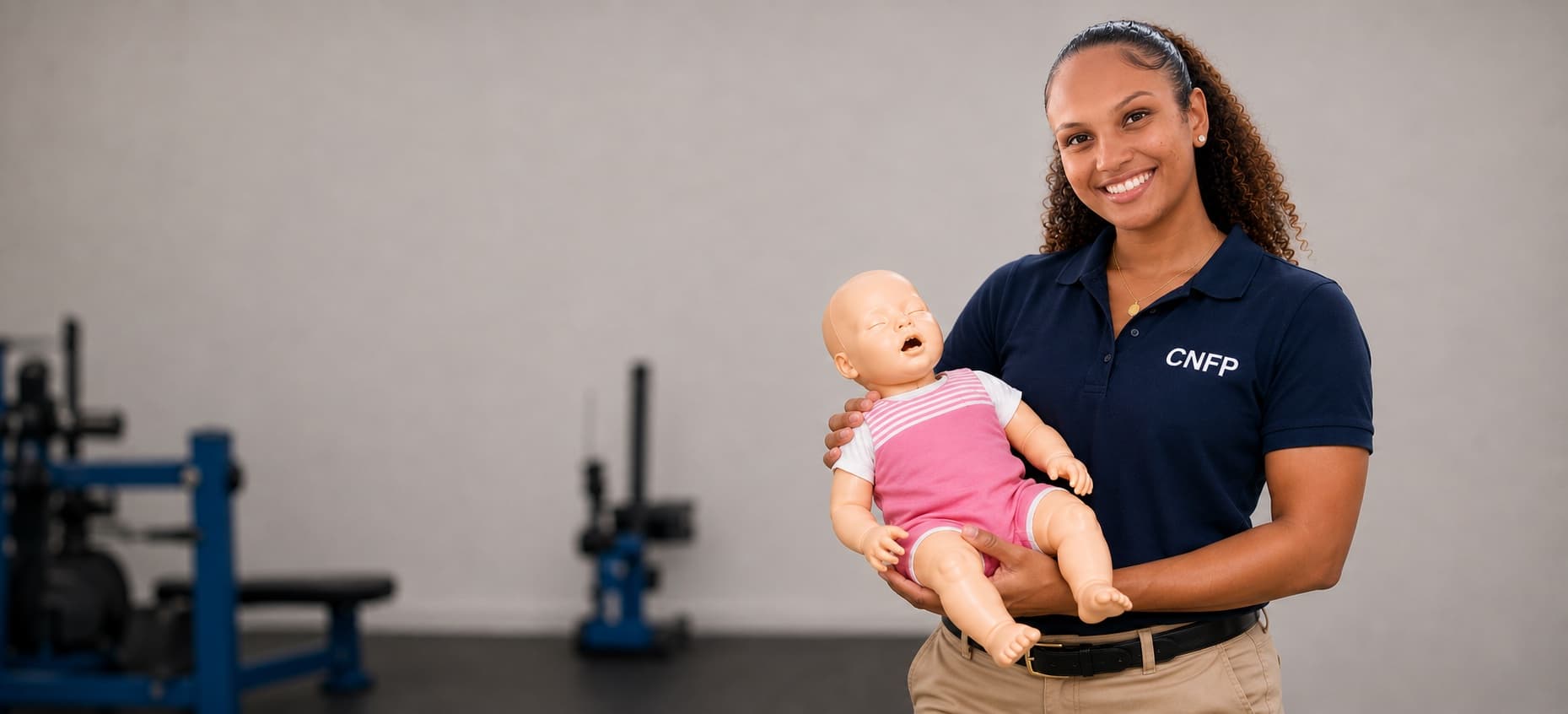
Course objectives
- Identify emergency situations in infants and children
- Protect, raise the alarm and organise the emergency response
- Perform the appropriate first aid actions
- Respond to choking, loss of consciousness or cardiac arrest
- Adopt effective and safe behaviour in an emergency situation
Who it is for
Audience
Early childhood professionals (nurseries, micro-nurseries, drop-in childcare centres); Health and social care professionals; Local authority staff and public sector personnel; Employees of businesses that receive children; Volunteers and employees of associations working with children
Prerequisites
No prerequisites are required to attend this course.
Format
Face-to-face training, in our training rooms in Jarry or directly on your premises. A combination of theoretical input and practical scenarios, using the centre's training equipment. People with disabilities are invited to inform us of their adaptation needs when registering.
Lead time
Registration is possible up to 48 hours before a scheduled session, subject to availability. For a session organised on your premises, allow approximately 15 days between your request and delivery.
Course content
Introduction and fundamentals of paediatric first aid
- Presentation of the course, its objectives and the teaching plan
- Role of the first aider and limits of intervention in paediatric first aid
- General framework of first aid applied to infants and children
Analysis of emergency situations and protection
- Identifying emergency situations in infants and children
- Risk analysis and making the environment safe
- Implementing actions to protect the casualty
Raising the alarm and organising the emergency response
- Raising the alarm: when and how to call for help
- Passing on essential information to the emergency services
- Organising the wait for the emergency services and monitoring the casualty
Paediatric physiological characteristics
- Anatomical characteristics of infants
- Physiological differences between infants and children
- Impact of paediatric characteristics on first aid actions
Life-threatening emergencies: choking and loss of consciousness
- Recognising complete and partial choking
- Performing the appropriate actions in response to choking (infant and child)
- Managing loss of consciousness and placing the casualty in the appropriate position
Cardiac arrest and practical scenarios
- Recognising cardiac arrest in children
- Performing the first aid actions appropriate to paediatric cardiac arrest
- Practical scenarios and simulation exercises
Teaching team
The course is delivered by a professional trainer in prevention and first aid, holding the regulatory first aid certifications and with operational experience in training professional audiences.
The trainer has a thorough understanding of the specific features of interventions in a professional setting and adapts the teaching methods to the needs of organisations that receive children.
Monitoring and assessment
The course is subject to a satisfaction evaluation immediately after the session.
Participants' feedback is analysed in order to continuously improve the course content and delivery methods.
Technical and teaching resources
Infant and child training manikins
First aid training equipment
Visual teaching aids and training documents
Room suitable for practical exercises
Certification
Assessment
Attendance sheets signed by the participants and the trainer
Monitoring of trainees' participation and attendance
Assessment of learning during and at the end of the course
Certificate of completion issued at the end of the session
Quality and results
New course: the first indicators specific to this course will be published after the first sessions.
Centre-wide, from 30 January to 10 September 2026: 112 satisfaction reviews collected from trainees, average score of 9.30/10, with 92.9% of scores greater than or equal to 8/10; assessment pass rate of 97.3% (181 passes out of 186 trainees assessed).
These indicators are updated after each session and are available on request.
Accessibility
The course is accessible to people with disabilities.
Any specific request for teaching or equipment adaptations can be considered prior to the course.
A disability officer is available to support trainees.
Our disability lead reviews every request for adjustments: handicap@cnfp.fr
Interested in this course?
Session at your premises, dates to suit you, group size adapted.