
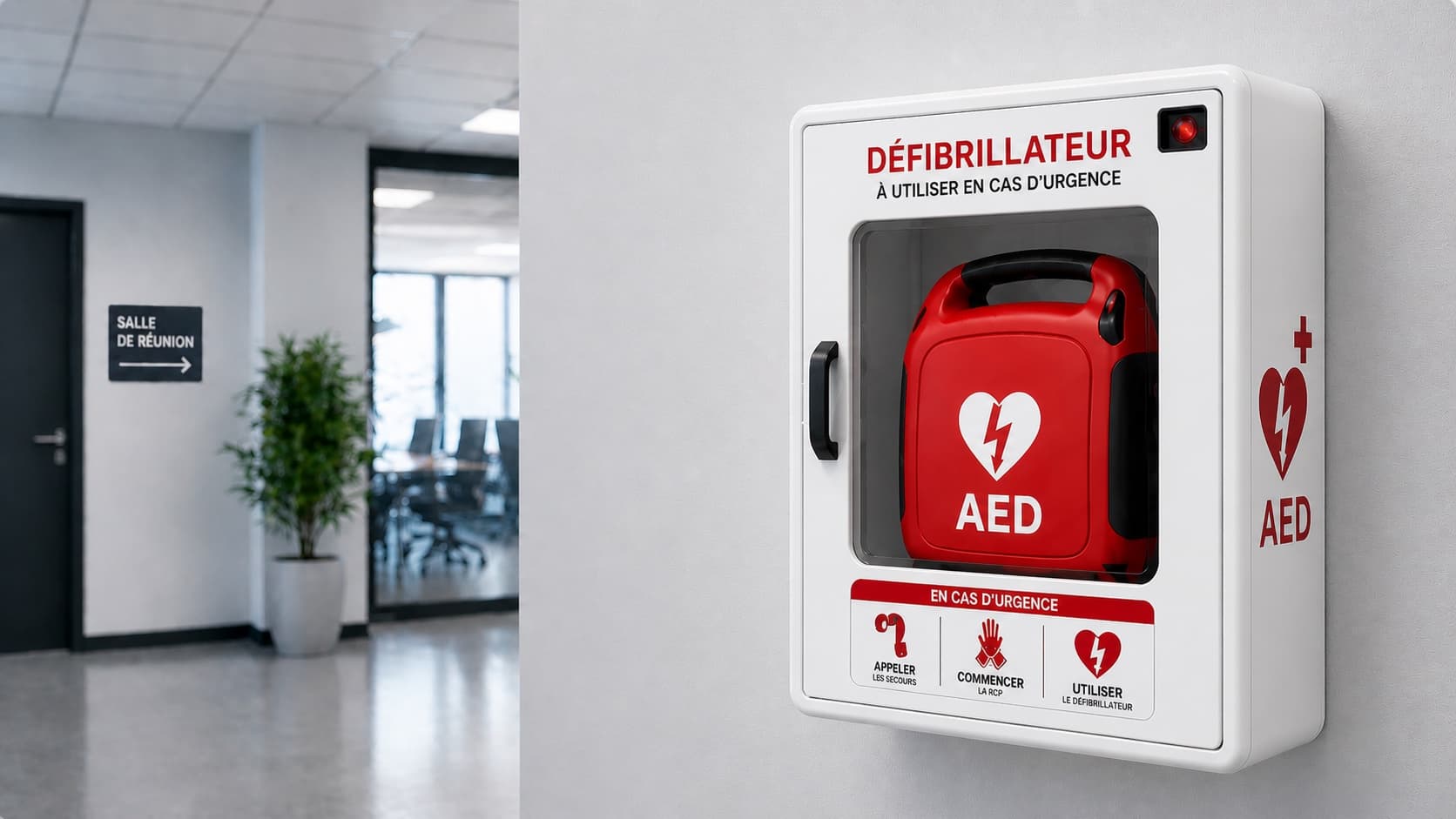
Course objectives
- Identify the signs of cardiac arrest
- Implement the appropriate course of action (protect, alert, rescue)
- Perform effective cardiopulmonary resuscitation (CPR)
- Use an automated external defibrillator (AED) safely
- Coordinate one's intervention while awaiting the arrival of the emergency services
- Act quickly and effectively in a life-threatening emergency
Who it is for
Audience
Businesses (micro-enterprises, SMEs, large companies); Local authorities (town halls, inter-municipal bodies (EPCI), public institutions); Establishments open to the public (ERP); Schools and training centres; Sports associations and leisure facilities; Hotels, restaurants and tourism sectors; Shops and supermarkets; Industries and technical sites; Event organisers; Property managers and building managers
Prerequisites
No prerequisites required; Course open to all; Understanding of the French language recommended
Format
Face-to-face training, in our rooms in Jarry or directly on your premises. A mix of theoretical input and practical scenarios, using the centre's training equipment. People with disabilities are invited to inform us of their adaptation needs when registering.
Lead time
Registration is possible up to 48 hours before a scheduled session, subject to availability. For a session organised on your premises, allow approximately 15 days between your request and delivery.
Course content
Sequence 1: Understanding and identifying a cardiac arrest situation
- What is at stake in cardiac arrest and the chain of survival
- Recognising a victim in cardiac arrest
- Alerting the emergency services and passing on information
Sequence 2: Performing effective cardiopulmonary resuscitation
- Positioning and chest compression technique
- Rate, depth and continuity of compressions
- Hands-on practice on a manikin
Using an automated external defibrillator (AED)
- How the defibrillator works and its role
- Safe implementation
- Full CPR + AED scenario
Teaching team
The teaching team of the Centre National de Formation et de Prévention (CNFP) is made up of expert trainers and specialists with solid field experience and a thorough command of the regulatory frameworks applicable to their areas of expertise.
CNFP's specialists are selected for their technical competence, their ability to pass on operational knowledge and their understanding of the professional realities of the trainees.
The teaching team is committed to the continuous improvement of practices, regulatory monitoring and adaptation of content in order to guarantee the quality, relevance and effectiveness of its training courses.
Monitoring and assessment
Participant satisfaction rate, rate of participation in practical exercises, rate of skills validation at the end of the session, number of participants trained, course recommendation rate and qualitative analysis of end-of-course feedback (strengths and areas for improvement).
Technical and teaching resources
Adult resuscitation manikins
Training automated external defibrillator (training AED)
Floor mats / practice surface
Hygiene consumables (disinfectant wipes, protective barriers)
Training materials (slideshow / explanatory visuals)
First aid reminder sheets
Training videos (if required)
Certification
Assessment
Attendance sheet signed by participants
Verification of attendance and active participation
Ongoing formative assessment during practical exercises
Observation of technical skills by the trainer
Individual corrections during scenarios
Validation of learning at the end of the session (full scenario)
Collection of participant satisfaction feedback (end-of-course questionnaire)
Quality and results
New course: the first indicators specific to this course will be published after the first sessions.
Across the centre, from 30 January to 10 September 2026: 112 satisfaction reviews collected from trainees, average score of 9.30/10, with 92.9% of scores at or above 8/10; assessment pass rate of 97.3% (181 passes out of 186 trainees assessed).
These indicators are updated after each session and provided on request.
Accessibility
CNFP considers every adaptation request in order to facilitate access to training for people with disabilities. A preliminary discussion makes it possible to assess needs and to consider, where possible, adapted arrangements.
Our disability lead reviews every request for adjustments: handicap@cnfp.fr
Interested in this course?
Session at your premises, dates to suit you, group size adapted.